
Design Journal / Landscaping
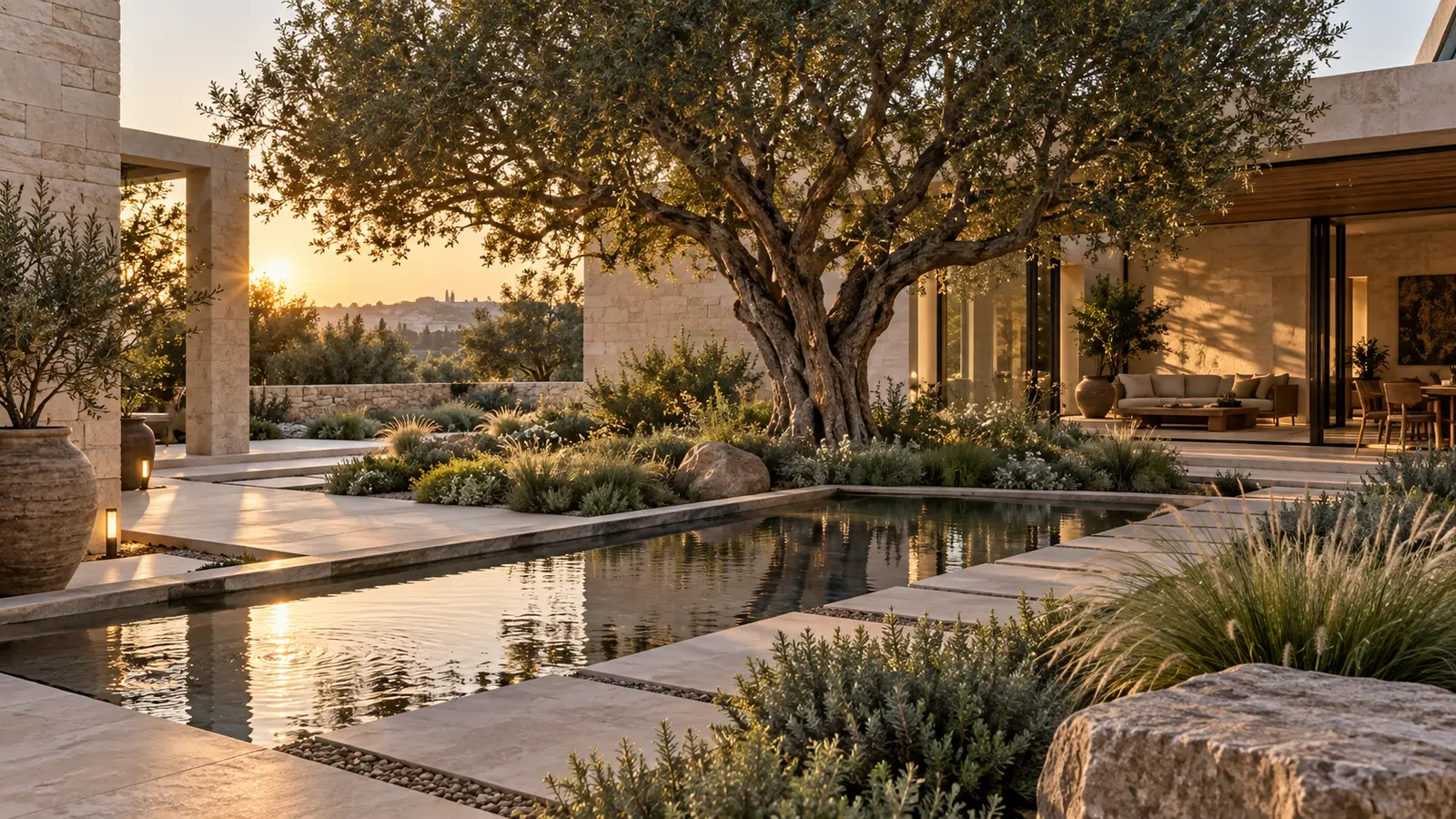
Climate-Responsive Landscaping for Contemporary Homes
A successful landscape is not leftover space around a building. It shapes arrival, privacy, shade, views and the way interior rooms connect with the outdoors. Climate-responsive landscaping also reduces maintenance pressure by working with the site rather than against it.
Design architecture and landscape together
Window positions, terraces, courtyards and entrances should respond to the landscape plan. When both are developed together, planting can frame views, soften boundaries and make outdoor areas feel like extensions of the interior. Levels and drainage can also be resolved before they become site problems.
Create useful shade
Trees, pergolas, screens and covered terraces can improve outdoor comfort while reducing direct solar exposure. Their placement should consider mature size, root behaviour, maintenance access and seasonal change. Shade is most valuable when it supports entrances, seating areas, play spaces and frequently used paths.
Select plants for the local conditions
Planting should respond to sunlight, soil, water availability and climate. A controlled palette of suitable species often creates a stronger identity and more manageable maintenance than a collection selected only for appearance. Native and well-adapted plants may require less intervention once established.
Plan irrigation and water movement
Irrigation zones should reflect different plant needs instead of watering every area equally. Soil preparation, mulching, drainage and rainwater routes deserve early attention. Hard surfaces should be graded carefully so water moves away from buildings without creating problems for neighbouring areas.
Build privacy in layers
Walls alone can make an outdoor space feel enclosed. A combination of level changes, trees, shrubs, screens and framed openings can create privacy while preserving air movement and visual depth. The strongest solution responds to both immediate boundaries and longer views.
Use outdoor lighting with restraint
Landscape lighting should support safe movement, reveal important planting or surfaces and maintain a calm nighttime atmosphere. Excessive brightness creates glare and flattens the scene. Low-level path lighting and carefully aimed accent light are usually more effective.
Frequently asked questions
When should landscape design begin?
Ideally during architectural concept design. Early involvement allows levels, drainage, utilities, courtyards, openings and outdoor uses to be coordinated together.
How can a garden require less maintenance?
Choose appropriate plants, simplify the palette, group plants by water needs, prepare soil properly and provide practical access for care. Maintenance should influence design from the beginning.
Explore Shapes Design Studio’s Landscaping service or request a landscape consultation.
Turn insight into action
Planning your next landscaping project?
Share your location, priorities and intended timeline. We will recommend the most useful next step.
Discuss your project