
If you’re a UK player hooked on the high-stakes thrill of Big Bass Crash, looking under the hood at how the game is built can be very enlightening https://bigbasscrash.uk/. There’s more to it than just pressing a button and hoping for the best. The game functions using a sophisticated digital framework that mixes random number generation, mathematical models, and live server processing. Learning this technical side helps you see past the basic gameplay. You begin to grasp the complex engineering that sets the crash point, manages your “cash out”, and strives to keep everything honest, transparent, and thrilling. Let’s analyse the main parts, from the vital Random Number Generator to the behind-the-scenes chat between your device and the game server that ensures each round both a surprise and smooth to play.
The Core Engine: Random Number Generator (RNG) Clarified
The Random Number Generator (RNG) is the indispensable centrepiece of Big Bass Crash. Think of it as a certified, digital deck of cards being shuffled forever. This complex algorithm produces results that are completely unpredictable and in no set order. It decides the exact multiplier where the game will crash each round. The moment a round starts, the RNG picks a crash point from a huge range of possibilities and fixes it with cryptographic security. This is the crucial part for UK players: this happens in an instant and can’t be changed. Nothing you do after the round begins can alter that pre-set outcome. Independent testing labs verify this RNG regularly. Their audits validate its fairness and that it meets UKGC standards, so every player has the same random shot at success on every single climb.
Game Server Logic and Deterministic Outcomes
The RNG sows the seed of chance, but the game server is the controller that runs the show. Stored in a secure data centre, this server takes the RNG result and directs the entire round. It sends the signal to start, triggers the climbing multiplier, and finally calls the crash. This setup is “deterministic”. The crash point is set from the very beginning, but the game unveils it bit by bit to build the tension. The server also does all the important maths, determining what each player could win based on their stake and when they cash out. Having one central point of control is vital for security. It stops any tampering from a player’s device and assures everyone in the same round experiences the same game flow and result. This builds a unified, trustworthy multiplayer space.
Client-Side Interface: What Players Experience and Interact With
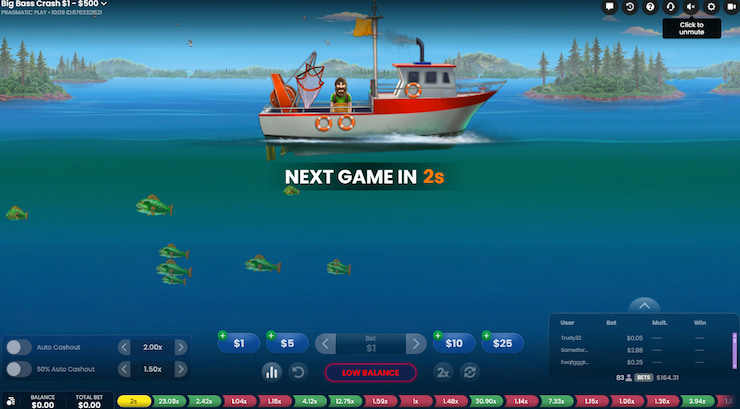
The client-side is simply the presentation layer, the visual front you see on your screen. Built with tools like HTML5 and WebGL, this interface paints the underwater world, the rising multiplier line, and the dynamic Big Bass avatar. It gets a live data feed from the game server and turns it into the climbing numbers and graphics you watch. Its main job is to send your actions—placing a bet, triggering cash out—back to the server for approval. It has zero say in the game’s rules. View it as a very smart display terminal. This split between show and substance means the thrilling graphics and sounds stay perfectly synced with the server’s central clock. You get a smooth, immersive experience that doesn’t compromise on fairness or security.
The Multiplier Graph: Mathematical Framework and Risk
That thrilling climb of the multiplier isn’t just a straight line. It operates on a specific mathematical model. This model sets the game’s volatility, its risk profile. It controls how often and where the game might crash. A high-volatility model could result in more frequent low multipliers, but with the chance of a rare, sky-high crash. A lower volatility model might provide more consistent, mid-range multipliers. The exact algorithm shapes the curve’s shape and the odds of a crash at any moment. For UK players, the takeaway is this: the model is a fixed, audited piece of the game’s code. It establishes the built-in risk and reward, so players who think strategically can fine-tune their cash-out timing based on the game’s statistical personality over hundreds of rounds.
Server Framework: Real-Time Data and Server Communication
The real-time excitement of Big Bass Crash demands a reliable network to function. Low-latency connections, typically using WebSocket protocol, maintain a constant two-way link established between your device and the core game server. This enables the multiplier value transmit to you in real time and sends your cash-out command directly back. Your individual internet connection matters here. A slow or inconsistent connection can create a lag separating what the server knows and what you perceive, which might result in missing your cash-out window. The system is constructed to be sturdy, but a stable connection is your optimal option. It ensures your actions get to the server and are confirmed without a annoying delay, preserving the gameplay smooth.
Safety Protocols: Ensuring Honest Gameplay and Data Protection
Safety isn’t a secondary element; it’s woven into the core of the game. Aside from the random number generator certification, the system’s design utilizes several layers of protection. Every piece of data moving between you and the server is secured with standards such as TLS, ensuring your personal and payment details secure. The game server operates in a secure environment featuring strict access controls and mechanisms to detect intruders. A lot of versions also use a provably fair system. This gives players with technical knowledge the tools to check, using cryptographic seeds, that the game round’s result was determined fairly and remained unchanged. For players in the UK, these systems show a serious commitment to protection. This helps the game title meet data protection laws and the rigorous security regulations imposed by the United Kingdom Gambling Commission.
Sound and Visual Engine: Creating Immersion
The captivating, underwater theme of Big Bass Crash comes from a dedicated sound and graphics engine. This section of the machine interacts with the game server to trigger certain visuals and sounds at exactly the right time—the water bubbles, the tense music as the line climbs, the splash and snap of the crash. These audio and visual files are kept and transmitted smoothly to prevent long loading screens without losing quality. The engine’s job is to weave a sensory experience that pumps up the anticipation. For you, this layer is what turns a maths-based betting game into a true spectacle. The architecture ensures this feeling is the identical whether you’re on a phone, a tablet, or a desktop computer.
Back-end Systems: User Accounts, Wallet, and Transaction Handling
Underneath the glitzy game screen, a separate backend system handles everything that isn’t pure gameplay. It manages player account details, maintains encrypted wallet balances, and executes your deposits and withdrawals. When you place a bet, this system promptly earmarks those funds from your wallet. If you cash out successfully, it calculates your winnings and adds them to your balance, all while preserving a precise record of every transaction. This system connects with different payment gateways to support popular UK options like debit cards and e-wallets. Its reliability and accuracy are absolutely critical. It manages sensitive money operations and guarantees your balance is always correct, establishing the trustworthy financial backbone of your entire experience.
Mobile versus Desktop: Design Variations for Various Devices
The essential game—the mechanics and the RNG—remains the same one bit if you play on a phone, a iPad, or a PC. But the way it’s shown to you does adapt. On mobile, the UI is tweaked for touch screens, smaller screens, and sometimes shaky network signals. The imagery might use variable streaming to keep things smooth. The design is often “responsive”, meaning it rearranges the layout and button dimensions to match your display. Data exchange with the host is also adjusted to be gentler on mobile data and battery life. For UK players on the go, this translates to you experience the equally fair, server-run game, just delivered for your device. The aim is a steady Big Bass Crash gameplay across all your gadgets, with no drop in security or equity.